The story of psychedelics

The plants were here first.

The story of psychedelics runs from living traditions to modern laboratories, through prohibition and back into research. These chapters follow the people, discoveries and decisions that shaped it, and explain why we are building Lucid Plants.

Much of this history reached a wide audience through the American writer Michael Pollan, in his 2018 book How to Change Your Mind and the Netflix series of the same name.

Chapter 1

An ancient relationship.

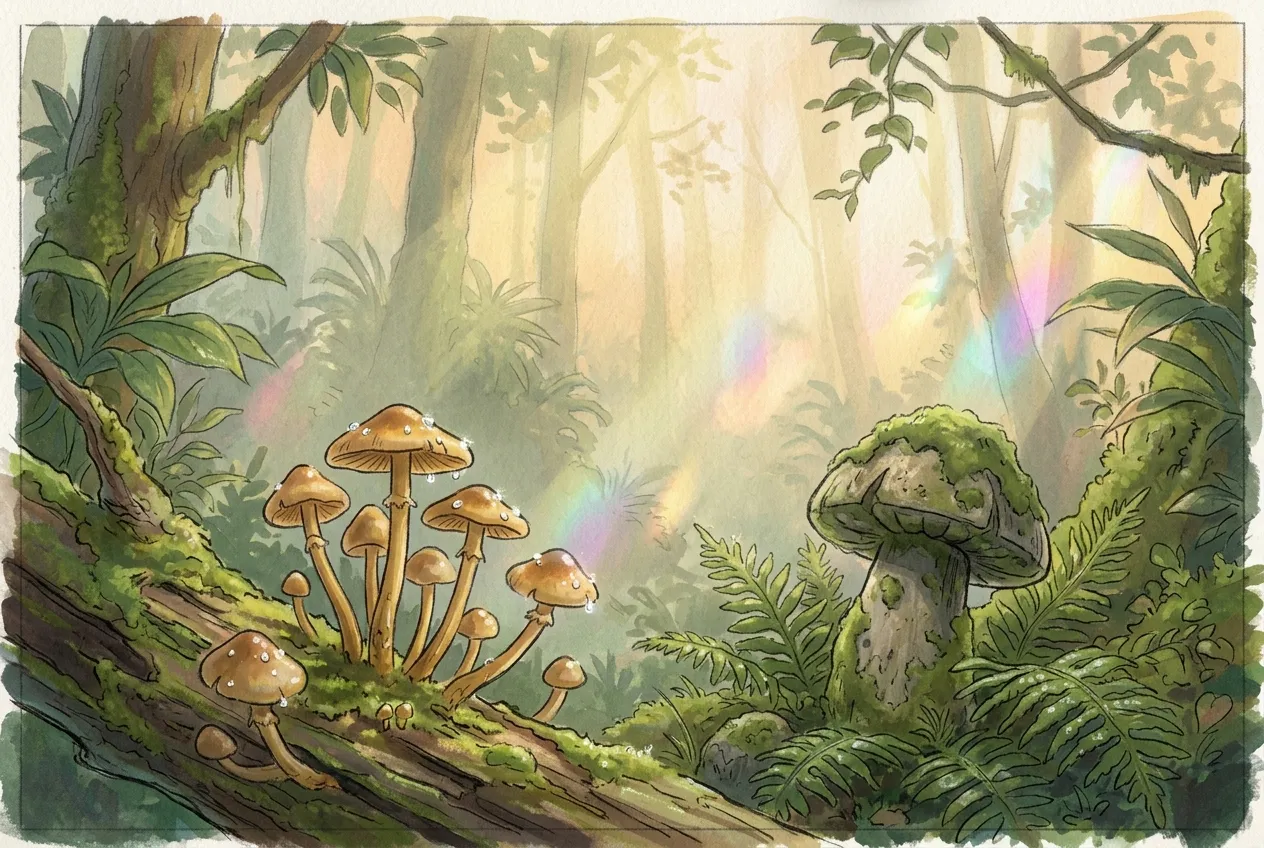
A misty mountain forest at dawn: golden wild mushrooms on a mossy log and an old carved mushroom stone among the ferns.

The history of psychedelics begins with people and their relationships with plants and fungi. In a cave in Texas, archaeologists found small objects shaped from ground peyote, a cactus that contains mescaline. Radiocarbon dating places them at around 4000 BCE, and when chemists tested them, the mescaline could still be detected.12

Further south, in what is now Guatemala, people carved small stones in the shape of mushrooms between about 1000 and 500 BCE. The stones do not tell us which mushrooms they depict. Much later, the sixteenth-century Florentine Codex records the Nahuatl name teonanacatl for mushrooms.34

Archaeological finds give us fragments of the past. Living traditions tell another part of the story. In June 1955 an American banker, R. Gordon Wasson, attended a mushroom ceremony with the Mazatec healer María Sabina in Huautla de Jiménez, Mexico. In the United States, the Native American Church has long treated peyote as a sacrament, and a 1994 amendment to federal law protects traditional Native American religious use of peyote. Peyote belongs to those traditions, and it is not part of our line.56789

Ancient texts from India and Greece raise related questions, though the evidence is less certain. The ancient hymns of India praise a drink called soma, and the initiates of the Mysteries at Eleusis in ancient Greece drank something called kykeon. What was in them is still an open question. In 1978 the chemist Albert Hofmann and two colleagues proposed that kykeon contained a substance made from ergot. It remains a hypothesis.101112

Chapter 2

Amazonia.

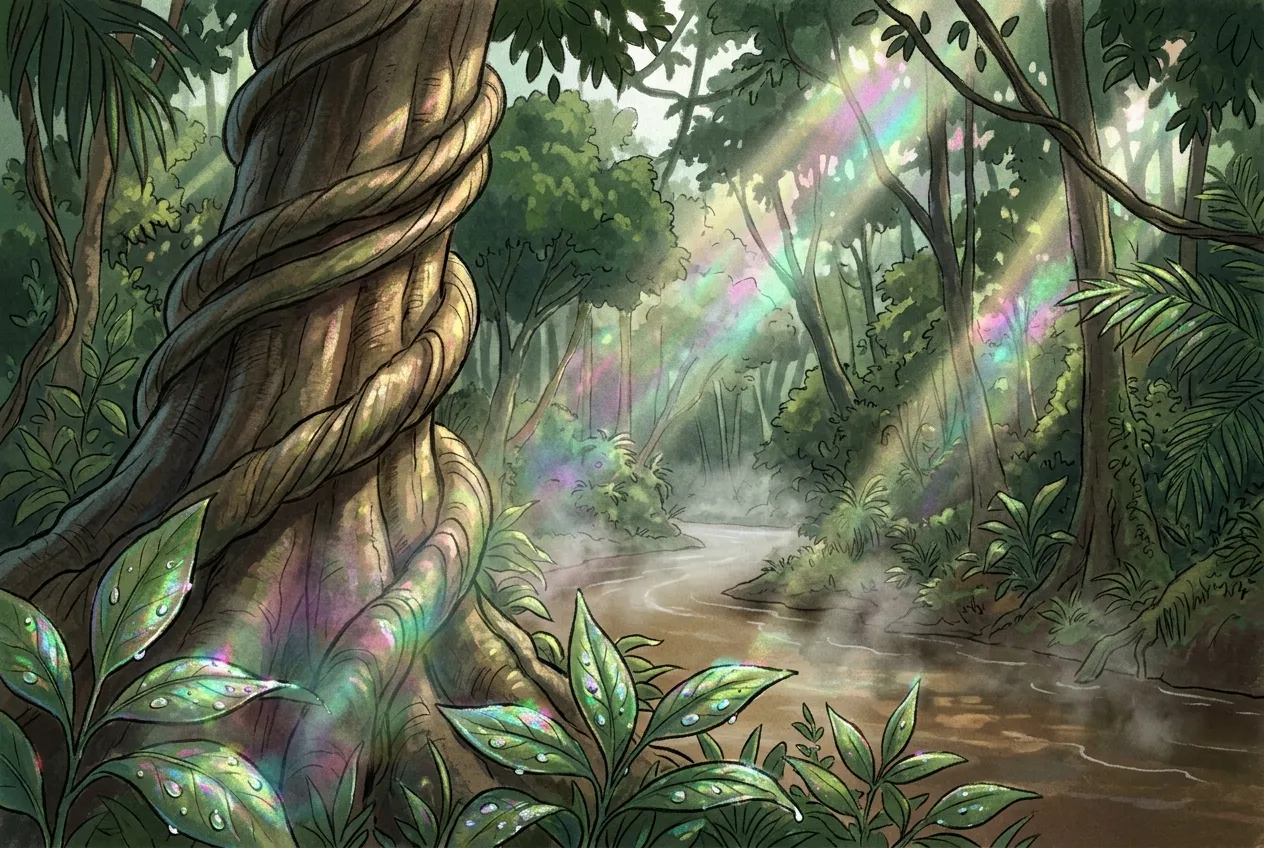
The Amazon at first light: a thick vine coiling up a giant tree, dewy chacruna leaves and a misty river.

In the Amazon, ayahuasca belongs to living traditions with their own names, ceremonies and knowledge. It usually combines a woody vine, Banisteriopsis caapi, with the leaves of a shrub such as chacruna, which contain DMT. When DMT is swallowed on its own, enzymes in the gut break it down before it can act. Compounds in the vine, harmine and harmaline, block those enzymes, and that is why the brew works when it is drunk.1314151617

Those traditions are alive today, but their beginnings are difficult to date. In a rock shelter in Bolivia, archaeologists found a ritual bundle about a thousand years old that held traces of DMT and harmine side by side, along with other compounds. That does not prove anyone brewed or drank them together, and scholars still disagree about how old the drink itself is.18192021

Ayahuasca is one widely used name, not the name of a single uniform tradition. In Colombia it is called yagé. The Huni Kuin call it nixi pae, the Yawanawá call it uni, and the Shuar and Achuar call it natem. The Shipibo-Konibo of Peru are known for healing songs called icaros, and healers in the region say they learn such songs from the plants themselves.161722

The history also extends beyond Indigenous traditions. In the twentieth century, the brew became a sacrament of Brazilian churches, among them Santo Daime, founded in the 1930s, and the União do Vegetal, founded in 1961. In 2006 the US Supreme Court ruled that the government had not shown a compelling reason to stop the União do Vegetal from using it in its services.23242526

As outside interest grew, the peoples who kept this knowledge had to defend it. In 1986 an American obtained a US patent on a variety of the caapi vine. Organizations of Amazonian peoples challenged it as a claim on a plant sacred to them, and after years of dispute the patent expired in 2003. A union of Indigenous healers in Colombia, UMIYAC, puts it plainly: "The West must start to recognize that they are not the only masters of knowledge."2728293031

The brew also appears in contemporary personal accounts. In the 2022 film Ayahuasca With The Dragon of The Jungle, the American podcaster Aubrey Marcus compares the experience to an acorn that has no say in when it cracks open.32

Chapter 3

Basel, 1943.

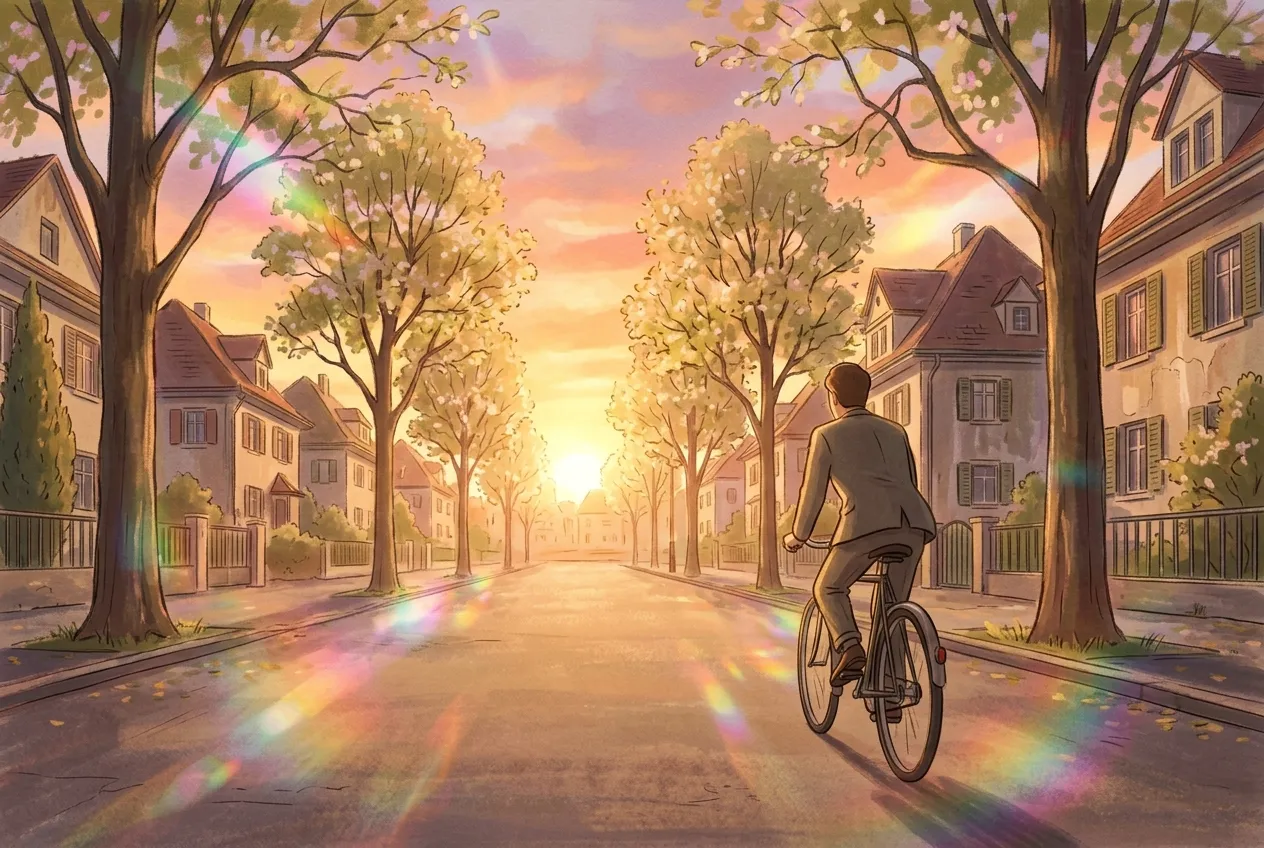
A lone cyclist riding home down a tree-lined street at sunset, the light breaking into rainbow colors.

While these traditions continued, another part of the story took shape in a Swiss laboratory. On 16 November 1938, Albert Hofmann, a chemist at the Swiss pharmaceutical company Sandoz in Basel, made a new compound from ergot, the fungus that grows on rye. He called it LSD-25. Its effects on the mind would remain unknown for five years.333435

On 16 April 1943 Hofmann felt its effects for the first time, after an apparently accidental exposure in the laboratory. Three days later, on 19 April, he took it on purpose to find out what it did, and rode home through Basel on his bicycle while it took hold. That day is still celebrated as Bicycle Day.3637

Sandoz began sending LSD to researchers in 1947, under the name Delysid. His work later connected the laboratory to the Mexican mushrooms introduced at the beginning of this story. In 1958 he and his colleagues isolated psilocybin, one of the mushrooms' mind-altering compounds. Mazatec healers had known the mushrooms for a very long time. Hofmann and his team identified the molecule.38394041

Chapter 4

From clinic to culture.

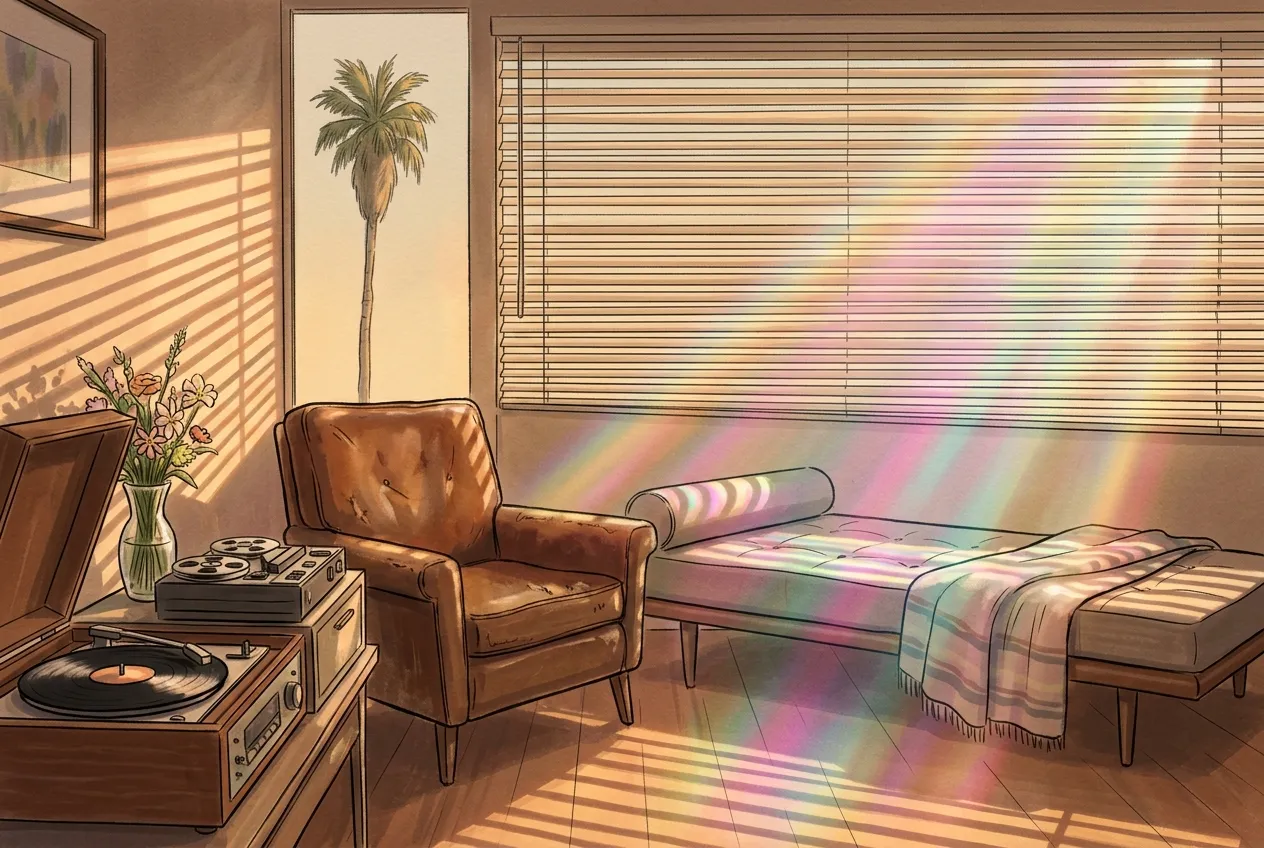
A 1950s therapy room in afternoon light: a leather armchair, a daybed, a record player and a tape recorder.

In the 1950s, psychiatrists explored what psychedelics might offer medicine. In Saskatchewan, Canada, the psychiatrists Humphry Osmond and Abram Hoffer studied LSD as a treatment for alcoholism. In 1957 Osmond introduced a new word for these substances: psychedelic, from Greek words meaning roughly "mind-revealing".424344

The work spread beyond those early studies. Historians estimate that by the mid-1960s more than a thousand clinical reports had described LSD treatment in about forty thousand patients. The actor Cary Grant received LSD therapy in Beverly Hills, when it was legal treatment. Bill Wilson, one of the founders of Alcoholics Anonymous, tried LSD himself in 1956.454647

Public attention brought consequences far beyond the clinic. In May 1957, Wasson told the story of his ceremony with María Sabina in LIFE magazine. Visitors poured into Huautla after that, some looking for a spiritual experience and others only for a high. The Fungi Foundation reports that María Sabina was arrested twice and robbed, and that neighbors set fire to her home.484950

Meanwhile, at Harvard, the psychologists Timothy Leary and Richard Alpert started a psilocybin research project around 1960. On Good Friday 1962, in a chapel in Boston, a researcher named Walter Pahnke gave twenty divinity students capsules before the service: some contained psilocybin, the rest an active placebo. A follow-up decades later found that those who had received psilocybin still described the day as deeply meaningful. It also found flaws: many students could tell which capsule they had been given, and distress during the sessions had been under-reported. The same era gave a name to an idea now known as set and setting: a person's mindset and surroundings shape the experience.51525354

Chapter 5

Fear and prohibition.

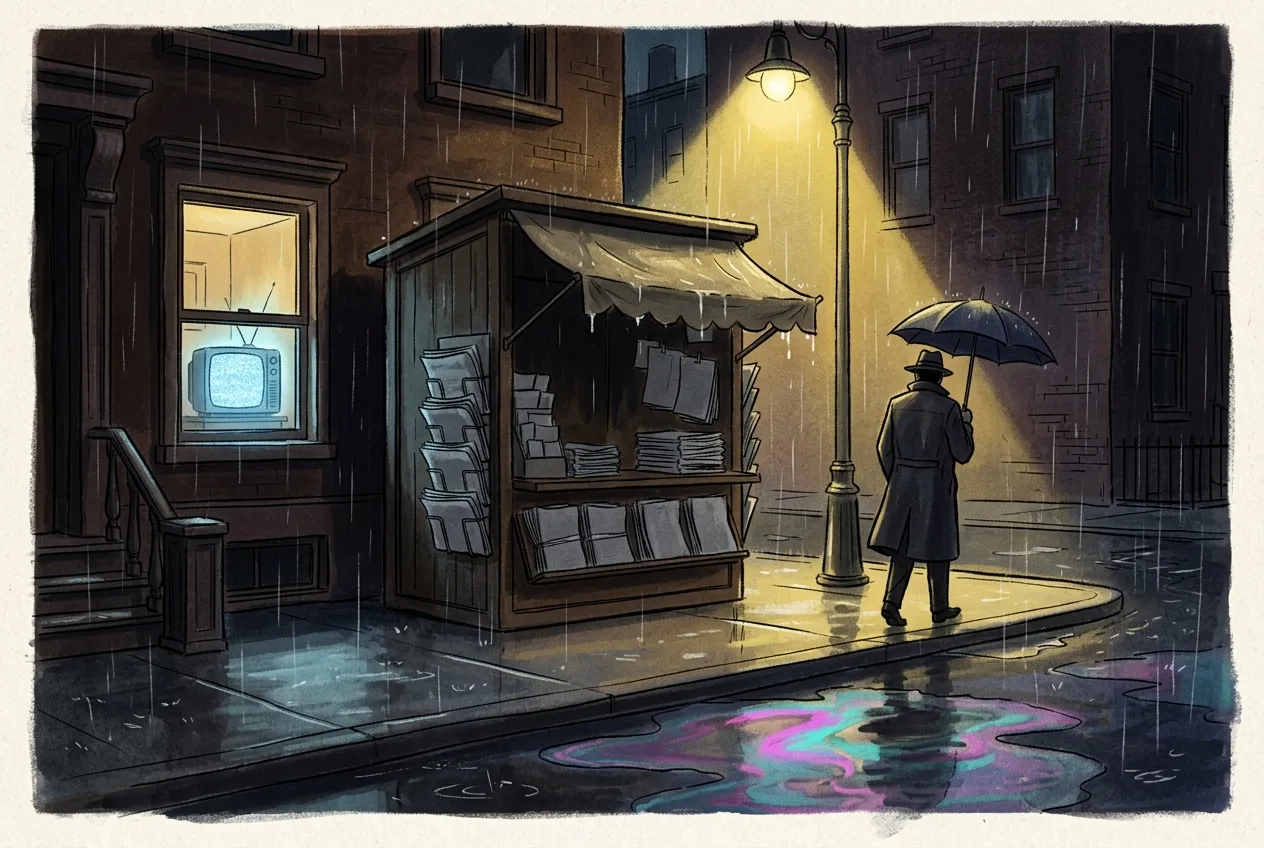
A rainy 1960s street at night: a newsstand, a television flickering in a window and a figure with an umbrella hurrying past.

The writer Michael Pollan has said that the stories he grew up with kept him away from psychedelics until he was nearly sixty: that LSD scrambled your chromosomes, that people on it jumped out of windows, that students had stared at the sun until they went blind. Some were distorted findings. Others were inventions. Together, they helped shape the public story of psychedelics.55

There were also real abuses, including by the American government itself. From 1953 the CIA's MKUltra program gave LSD to people who had not agreed to it, including in a San Francisco safehouse where unsuspecting citizens were watched through a two-way mirror. In 1973 the CIA's director ordered the program's files destroyed.565758

On 17 March 1967, a study in the journal Science reported damaged chromosomes in human blood cells that had been exposed to LSD in a laboratory dish. The New York Times ran the headline "Genetic Damage Is Linked to LSD" the same day. Four years later a review in the same journal concluded that pure LSD, taken in moderate amounts, does not damage chromosomes in the body and does not cause birth defects.596061

In January 1968, Pennsylvania's Commissioner for the Blind told reporters that six college students had stared at the sun while on LSD and gone blind. The story ran on front pages across the country. Within a week the governor called it a hoax, and the commissioner admitted that he had made it up.6263

Prohibition gave this era a lasting legal structure. In 1970 the United States placed LSD and psilocybin in Schedule I, the strictest category of its new drug law. One of its criteria is that a substance has "no currently accepted medical use in treatment in the United States". By then, historians estimate, more than a thousand clinical reports had described LSD treatment. In 1971 a United Nations treaty placed LSD and psilocybin under strict international control, with room only for limited scientific and medical use, and President Richard Nixon called drug abuse "public enemy number one".4564656667

The broader anti-drug message continued on television. In 1987 an American public service advertisement showed an egg frying in a pan and said: "This is your brain on drugs."68

Nik, who founded Lucentive, puts it plainly: "Fear is how populations are held."6970

Chapter 6

Research in retreat.

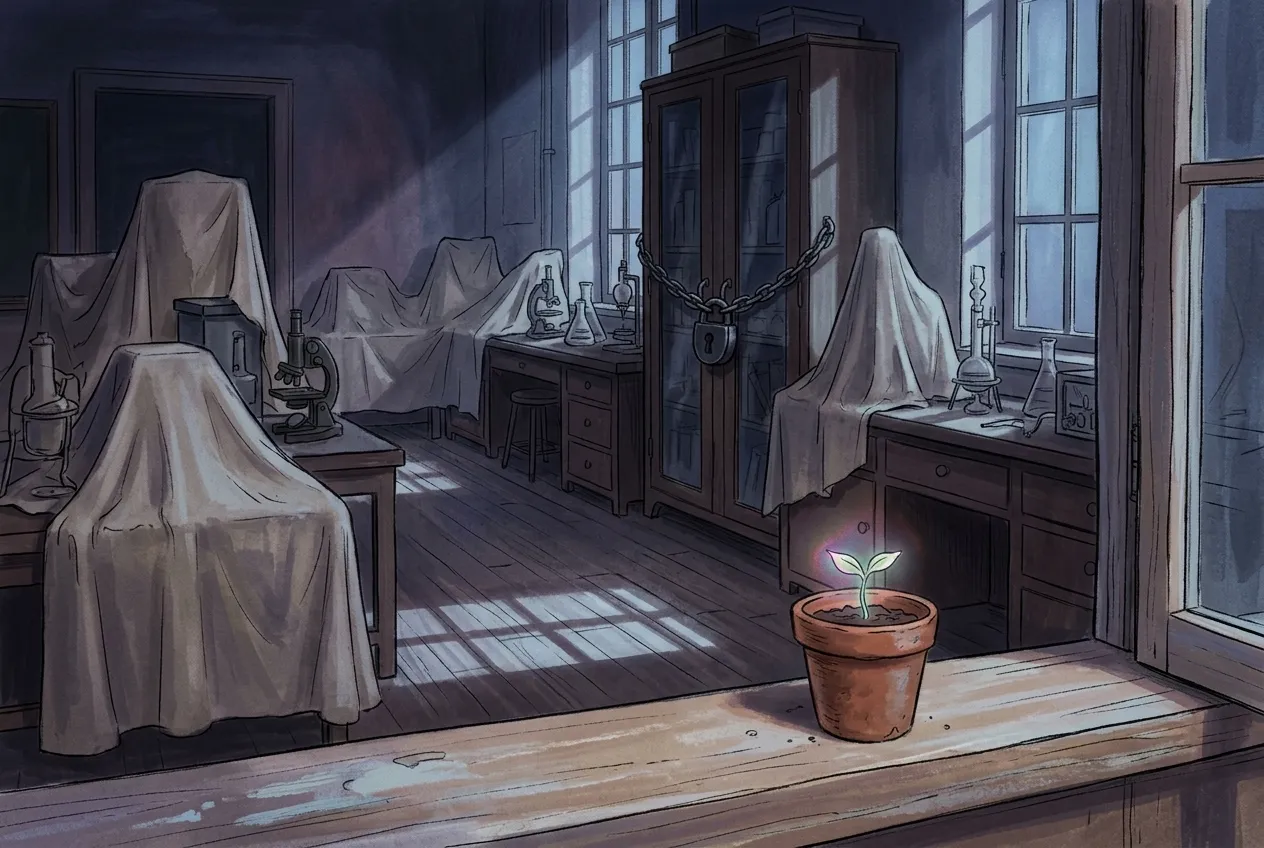
A locked laboratory at night, its equipment under dust sheets and a chained cabinet, one small seedling glowing on the windowsill.

The restrictions changed what researchers could do. By the mid-1970s, tighter laws, scarce supply, lost funding and stigma had made much of the earlier clinical research fade away. Research was never completely forbidden, but it had to survive on special permits and the persistence of a few people.7172

A few organizations and researchers continued the work. In 1986 Rick Doblin founded the Multidisciplinary Association for Psychedelic Studies, known as MAPS, a nonprofit that organizes and funds psychedelic research. From 1990 the psychiatrist Rick Strassman gave DMT to volunteers at the University of New Mexico, in what he describes as the first new human psychedelic studies in the United States in more than twenty years. In Switzerland, the researcher Franz Vollenweider kept studying psilocybin through the 1990s.737475

Chapter 7

The research returns.

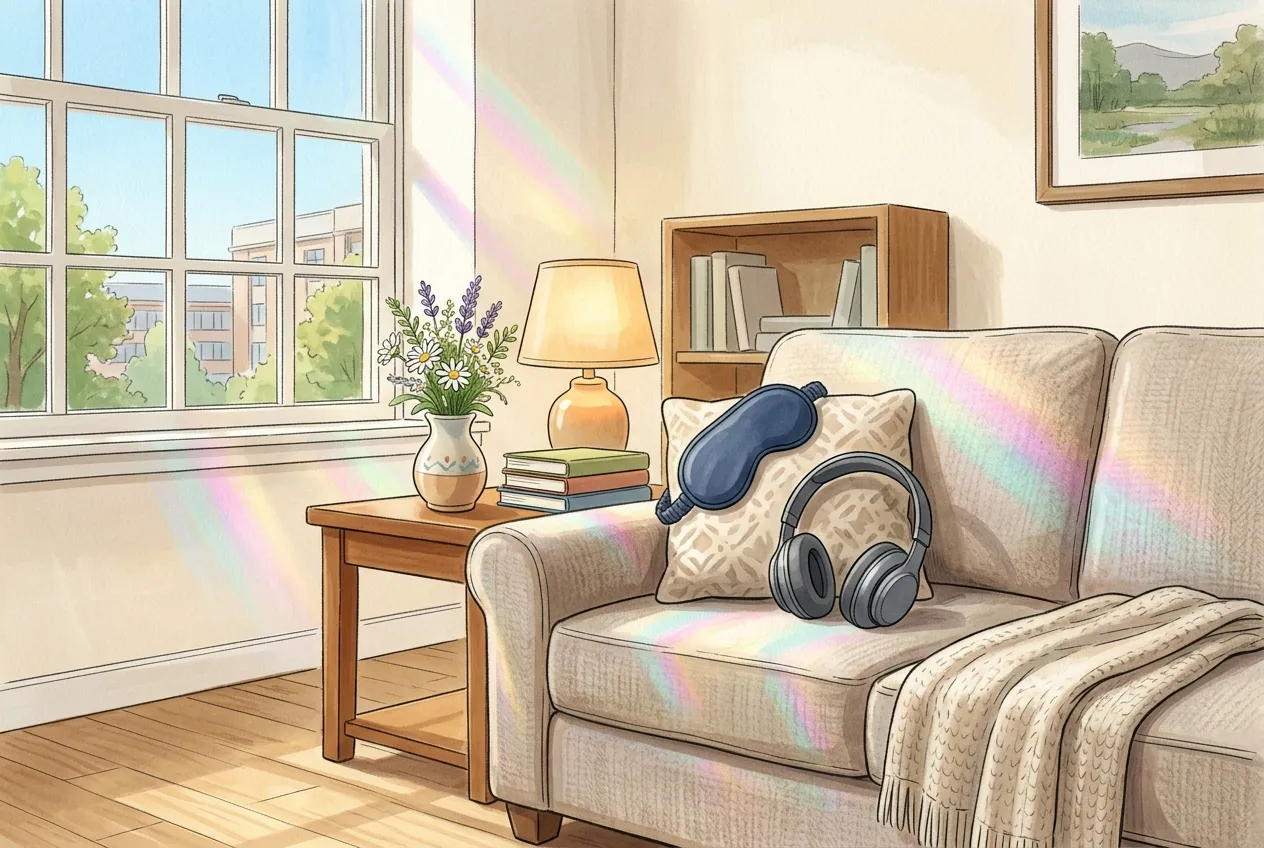
A bright session room today: a couch with eye shades and headphones, flowers and sunlight in rainbow bands.

A new wave of studies brought these questions back into view. In 2006, researchers at Johns Hopkins University gave psilocybin to 36 healthy volunteers in a calm, supported setting. About two in three later ranked the experience among the five most meaningful of their lives.76

Other researchers studied the harms associated with psychedelic use. In a 2010 study in the medical journal The Lancet, UK drug experts scored twenty drugs for the harm they do to users and to others. Alcohol scored highest, at 72. Heroin scored 55. LSD scored 7, and magic mushrooms scored 6, the lowest of all twenty. In 2013 and 2015, two large population surveys, each covering more than 130,000 American adults, found no link between having used psychedelics and having mental health problems.77787980

Clinical trials asked more specific questions. In 2016 Johns Hopkins turned to people facing life-threatening cancer, many of whom lived with anxiety and depression. In a trial with 51 patients, about 80 percent still showed clinically significant improvements in depression and anxiety six months after psilocybin. That six-month figure comes from following the patients over time, not from a comparison with placebo. Pollan tells of a woman in a psilocybin cancer study whose fear of dying, in her words to his fact checkers, had not been reduced but eliminated.8182

Other trials explored depression and alcohol use. In a small 2018 trial with 29 people whose depression had not responded to other treatment, 64 percent of those given ayahuasca had improved substantially a week later, compared with 27 percent on placebo. In a 2022 trial with 95 people who drank heavily, both groups received psychotherapy, and over 32 weeks those given psilocybin drank heavily on 9.7 percent of days, compared with 23.6 percent of days for those given an active placebo, although many participants could tell which treatment they had received.8384

That work continues. In a 2026 pilot trial with 82 smokers, 40.5 percent of those given psilocybin had verifiably stayed off cigarettes six months later, compared with 10 percent of those given nicotine patches; both groups also had behavioral therapy, and the trial was not blinded. In 2026 the company Definium also reported that its LSD treatment for generalized anxiety had outperformed placebo in two late-stage trials. Those are company-reported results.858687

None of this means psychedelics are for everyone. Clinical trials usually exclude anyone with a personal or family history of psychosis or bipolar disorder, so their safety results do not cover those groups. That is why the setting, the screening and the support matter, and it is part of how we think about building Lucid Plants.5488

Some jurisdictions have also begun to change the law, through specific programs rather than unrestricted access. Voters in Oregon approved supervised psilocybin services in 2020, and the first service centers opened in 2023. Colorado voted for its own program in 2022. From 1 July 2023, specially authorized psychiatrists in Australia could prescribe psilocybin for depression that had not responded to other treatment. And on 18 April 2026 a US executive order told federal agencies to speed up the development of psychedelic treatments.8990919293

Pollan, who calls himself a reluctant psychonaut and came to psychedelics late, describes the personal meaning he finds in these experiences in one of his talks: "The opposite of spiritual is egotistical."94
Chapter 8

What comes next.

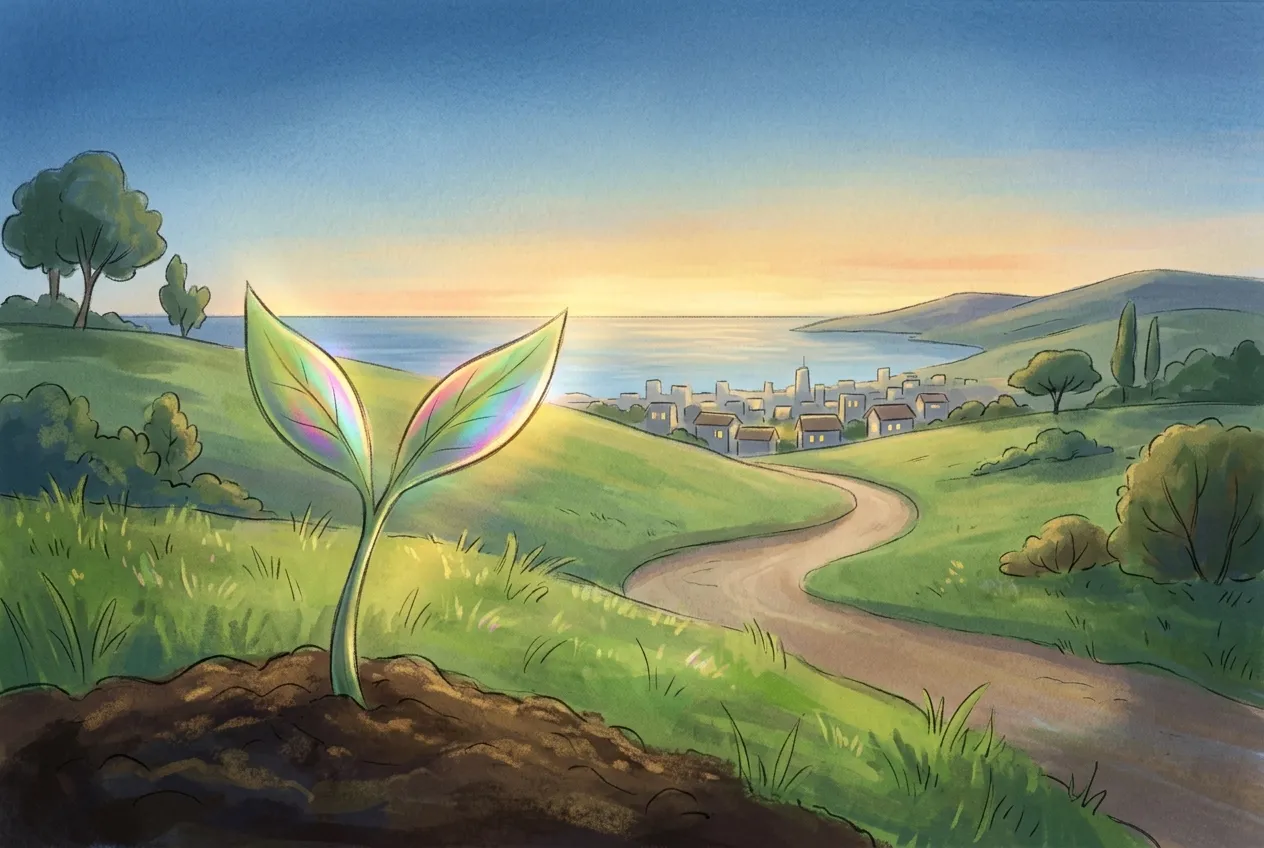
A young two-leaf seedling glowing in the first sunlight on a hill above a waking city by the sea.

We are currently working with policymakers around the world on legalization. The details of those talks are not public yet, and we expect the law to change very soon.9596

At Lucentive we believe the campaign against psychedelics held humanity back from the truth. We believe psychedelics are medicine and that they hold an answer for a great many people.97

We're already working on the formulas. Nothing is for sale yet.9899

Apply for early access

Early access

Stay in
the light.

Apply for early access to Lucid Plants. Sign in with Lucentive One, the one account for everything Lucentive builds, and tell us a little about yourself and the medicine you are drawn to.

It takes a minute, and you can change your answers or leave whenever you want.

Sign in with OneEarly access opens soon
How we handle your data