02 The Lucid Plants line
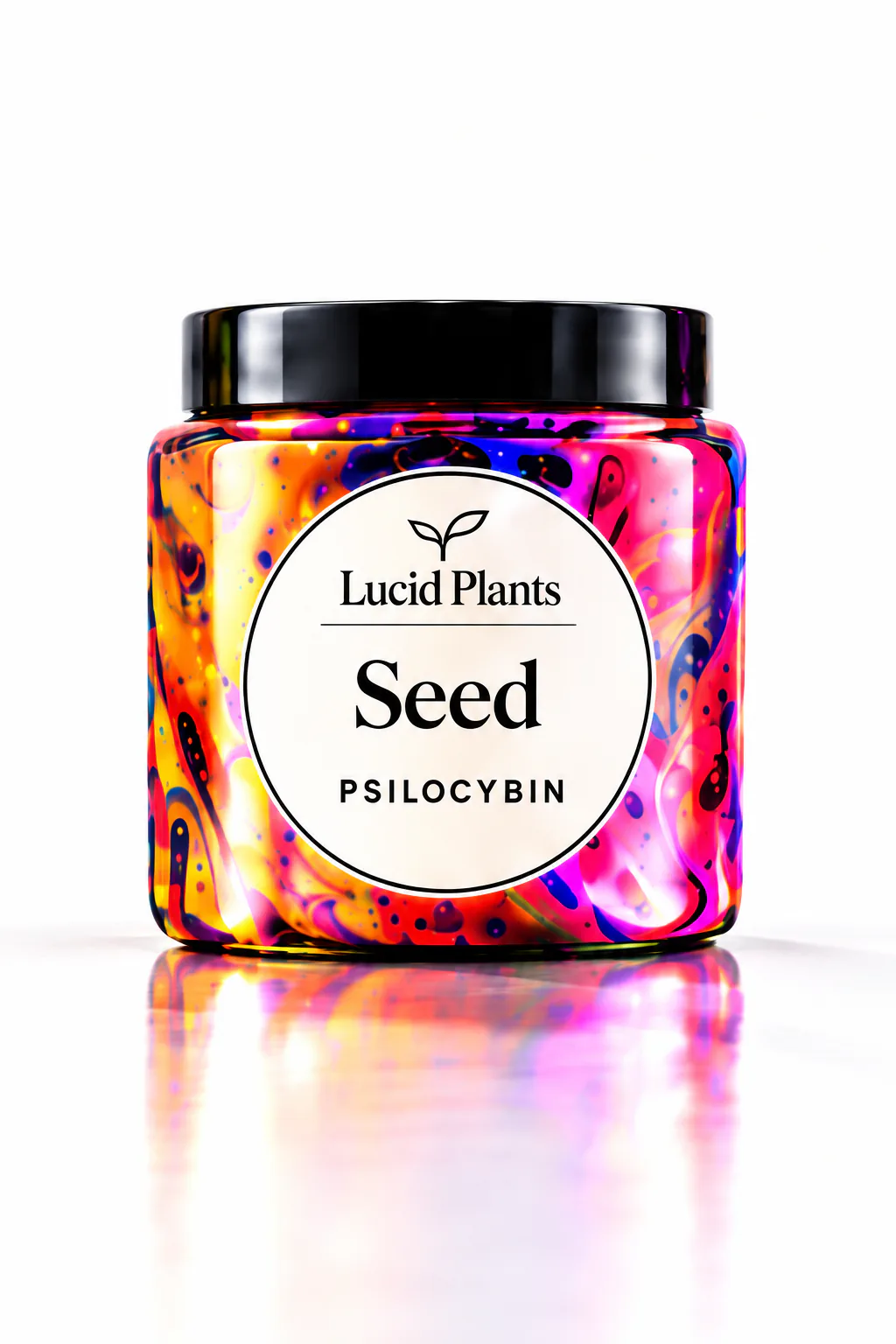
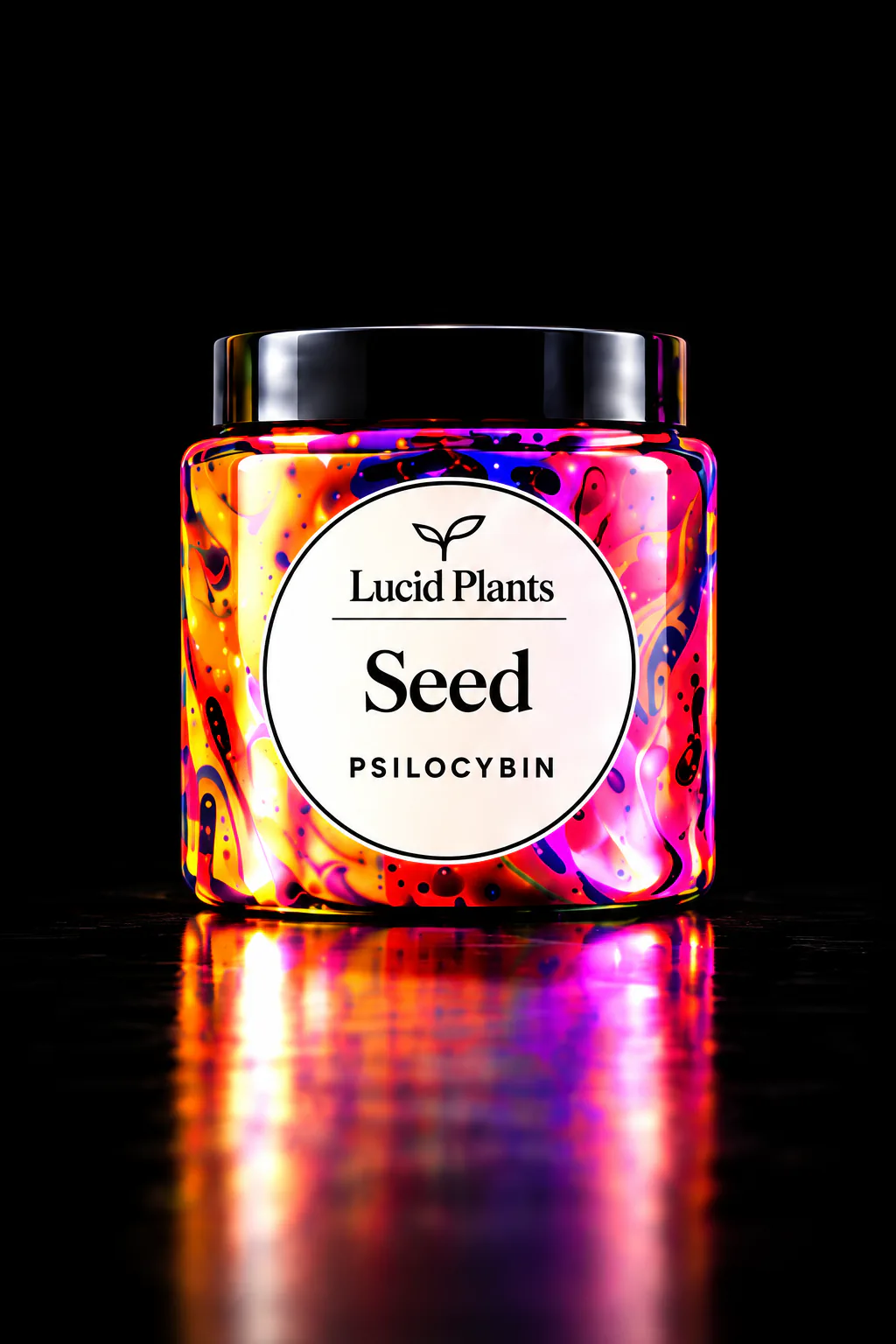
Seed
A quiet psilocybin capsule built around intention, clarity, and what may grow afterward.
- Substance
- Psilocybin
- Planned form
- Capsules
- Strains
- Albino Penis Envy, Golden Teacher, Jack Frost
- Status
- In development
Three strains
Seed comes
in three.
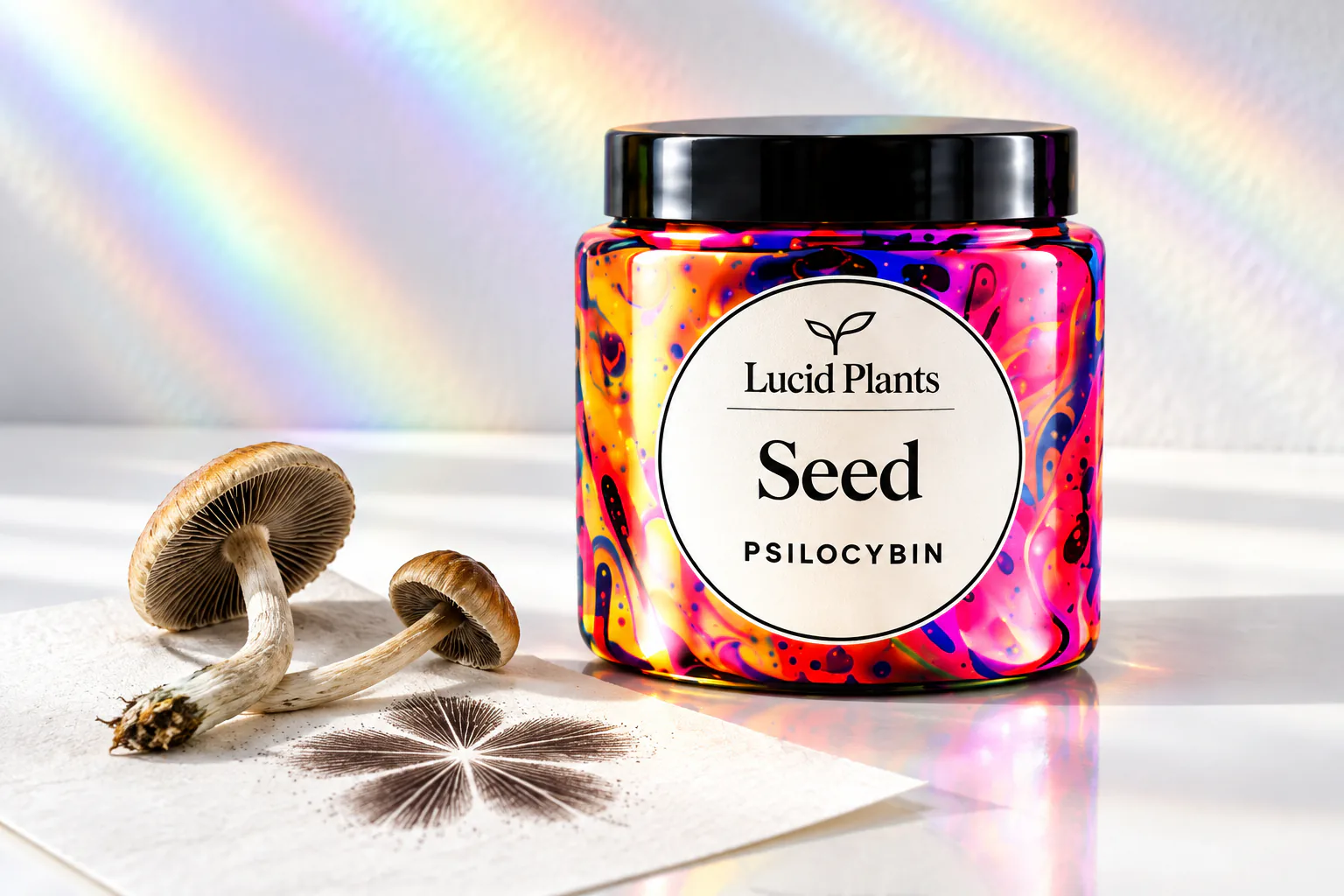
Seed comes in the same three mushroom strains as Bloom. The jar names the strain under PSILOCYBIN.1
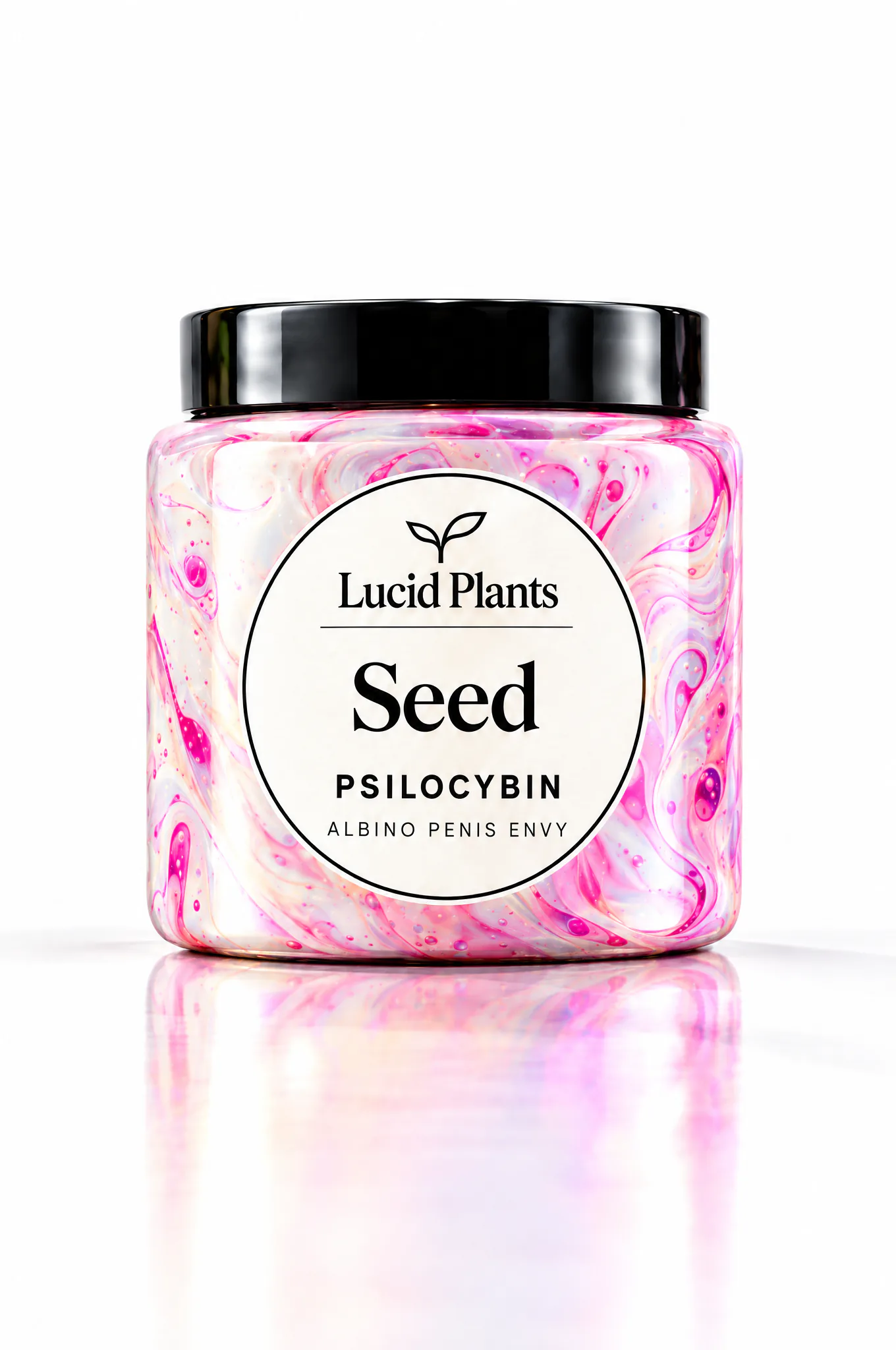
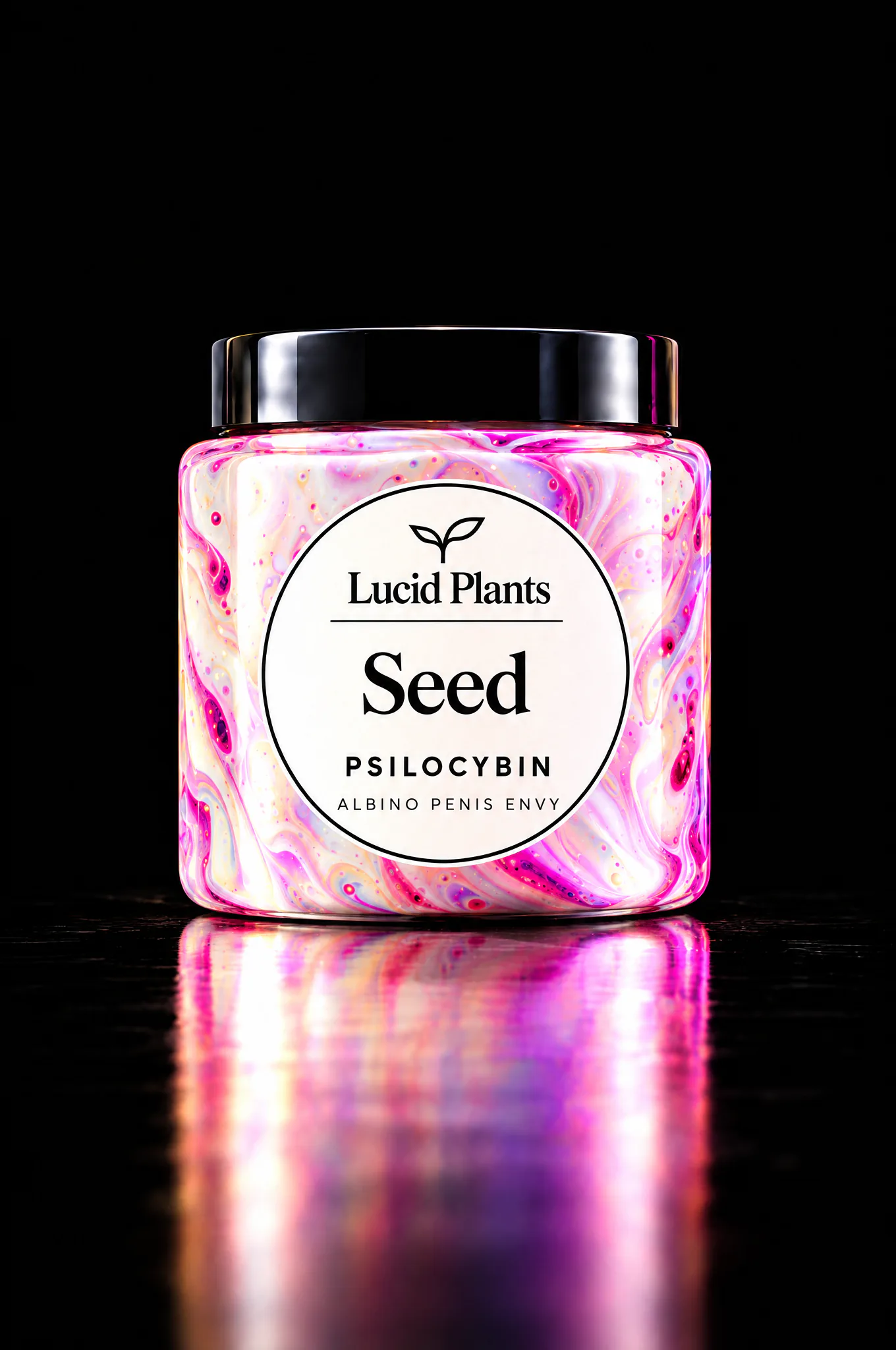
Albino Penis Envy
PSILOCYBINPale and dense, the strain with the biggest reputation.
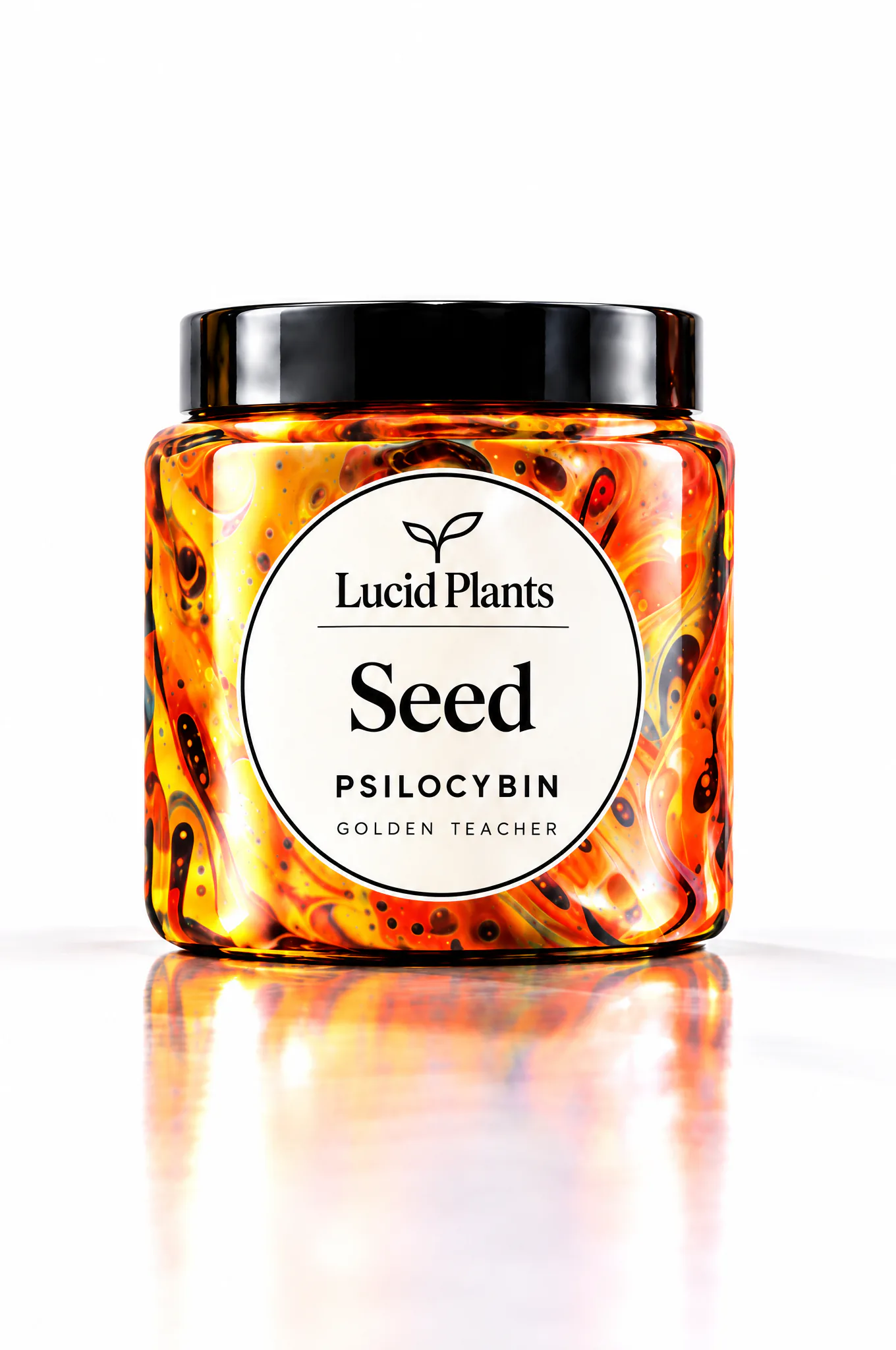
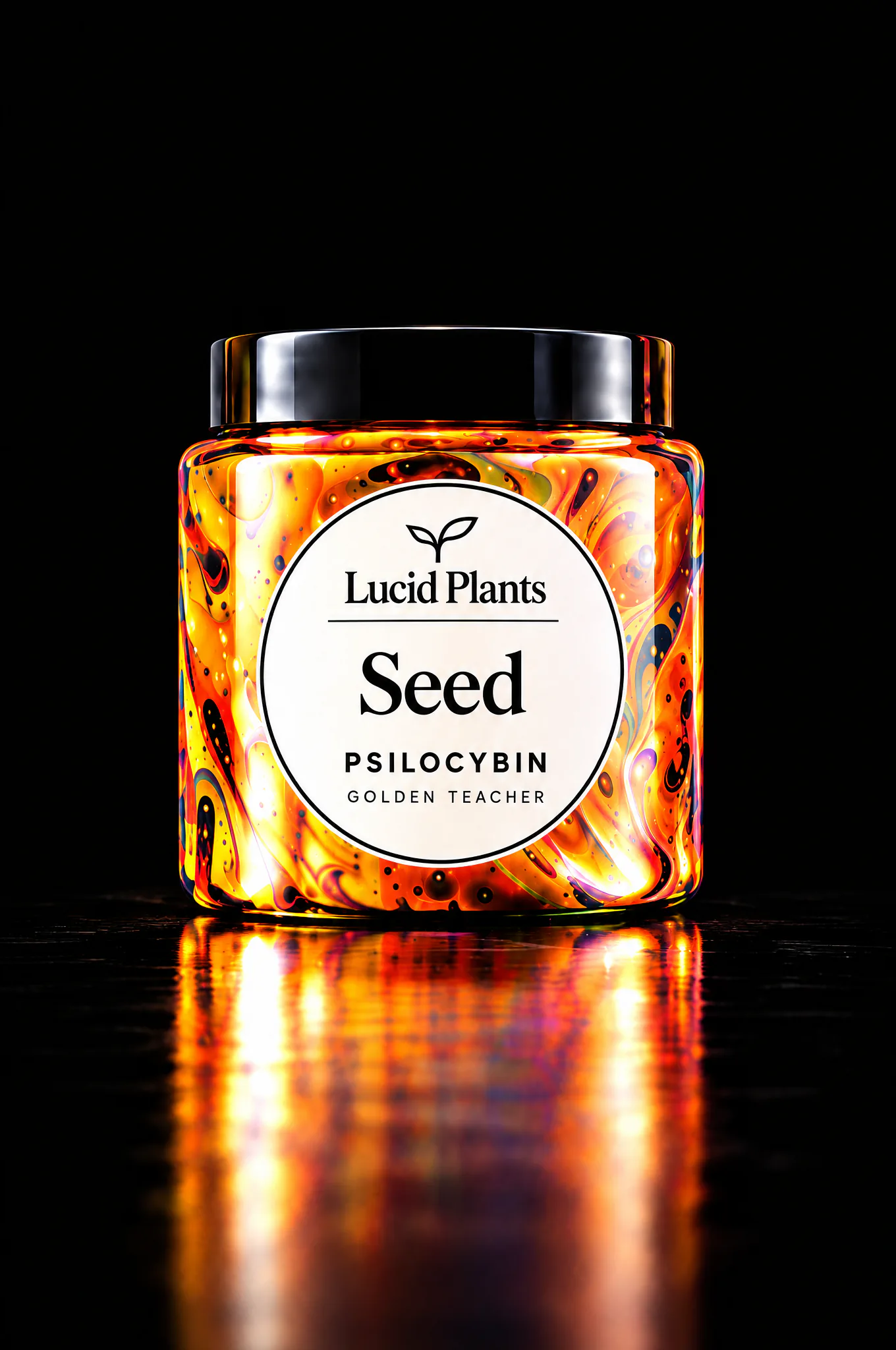
Golden Teacher
PSILOCYBINGolden caps, the classic most people meet first.
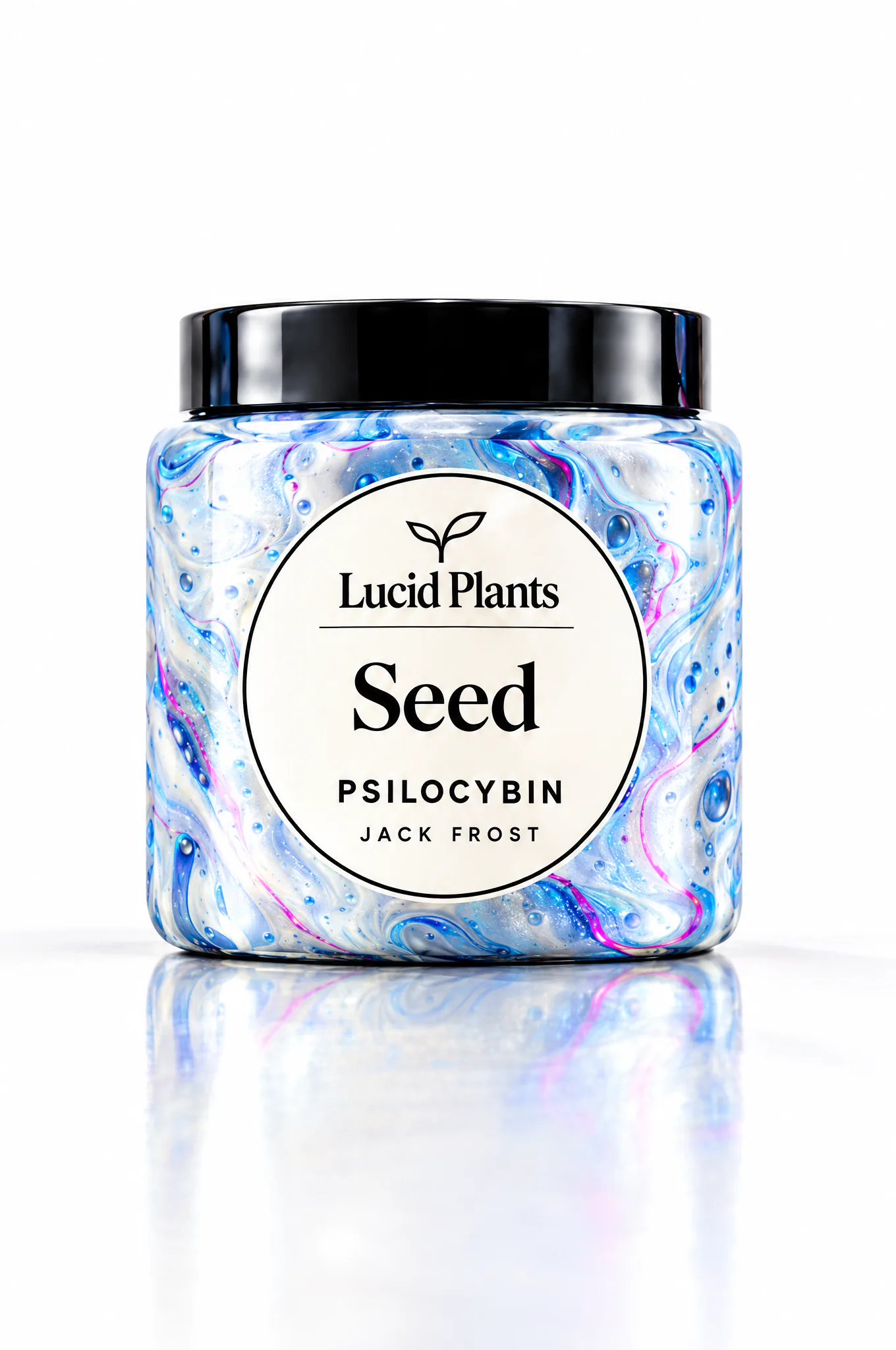
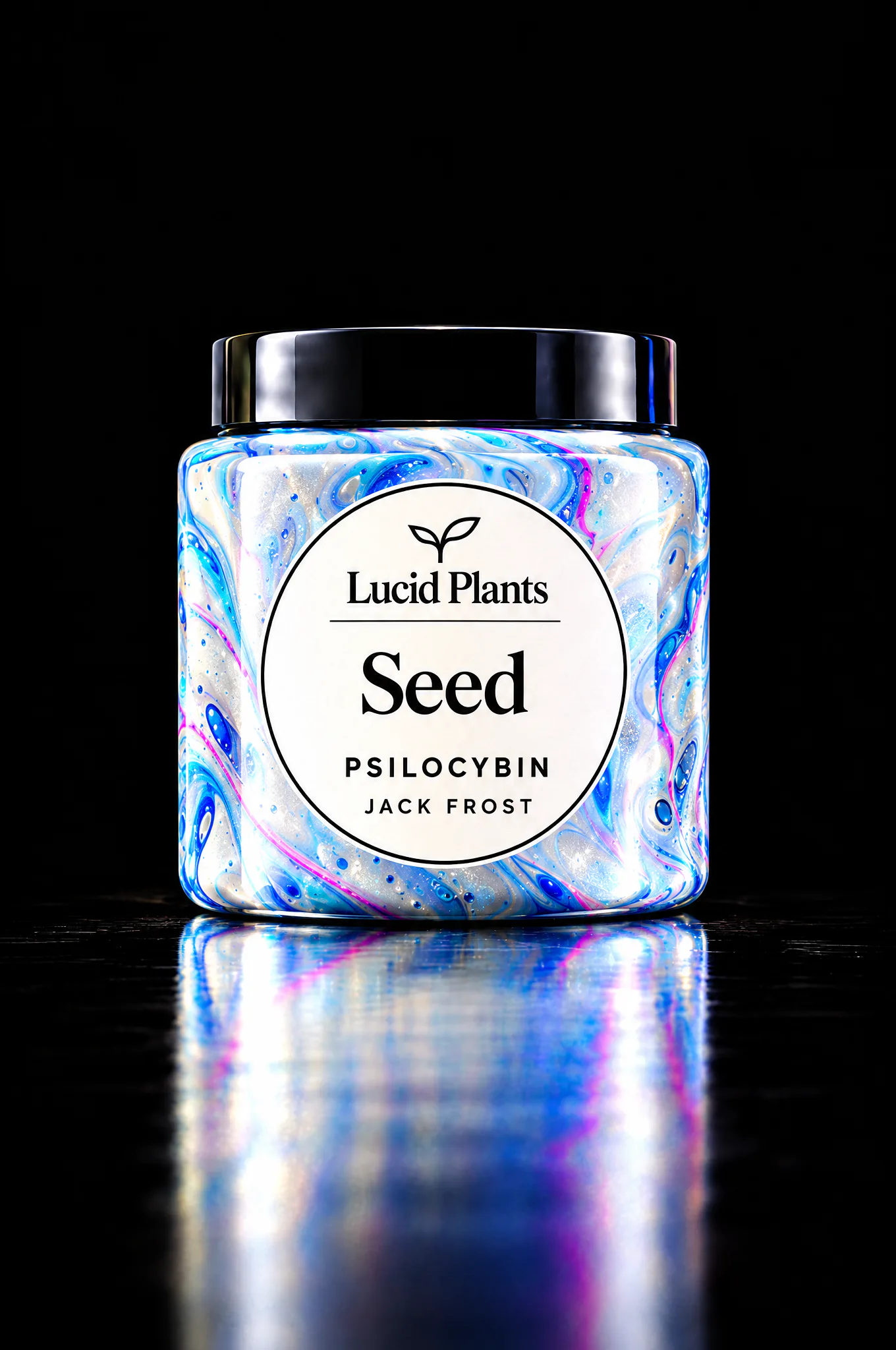
Jack Frost
PSILOCYBINFrost-white with a blue shimmer, a modern cross of two albino lines.
01 The product
What Seed is
Seed is our psilocybin capsule. Where Bloom is outward and expressive, Seed is quiet. Its name points to the smallest beginning of a larger change. We are working on its formula now.23
The label names Seed and psilocybin because we want the object to say plainly what it is.24
Seed comes in the same three mushroom strains as Bloom: Albino Penis Envy, Golden Teacher and Jack Frost. The jar names the strain under PSILOCYBIN.14
02 The experience
Change needs a setting
Psilocybin can occasion experiences that people describe as deeply meaningful. In a double-blind study with 36 carefully supported healthy volunteers, researchers reported mystical-type experiences with lasting personal meaning. Researchers have long used the phrase set and setting for a related truth: mindset and surroundings shape a psychedelic experience. A capsule may look contained. The experience it represents is shaped by much more than a container.567
Research conditions are carefully chosen. Clinical trials usually leave out people with a personal or family history of psychosis or bipolar disorder, so their safety findings speak for the people they included. Screening, support and room for the difficult parts of an experience all belong to that care.8
03 The evidence
What researchers are testing
Psilocybin research now spans several distinct questions. A randomized waiting-list study with 27 people found a depression response signal four weeks after psilocybin therapy. A randomized 104-person trial later found a larger improvement than an active placebo after 43 days. Both were supported treatment studies with selected participants.910
Other trials add nuance. A 59-person randomized study did not find psilocybin superior to escitalopram on its main measure. A 95-person randomized alcohol study found fewer heavy-drinking days in the psilocybin group, but both groups also received psychotherapy and many participants could tell what they had received. The evidence is promising.1112
Laboratory and animal studies have also found that psychedelics can encourage neurons to grow new branches and connections. Researchers call this psychoplastogenic activity. Whether it explains the changes people describe is still an open question, and a clue to how the brain may become more flexible. All of this research took place in laboratories and clinics. Seed is our own form of psilocybin.213
04 The roots
From ceremony to molecule
The modern capsule sits at the far end of a story that began outside the laboratory. María Sabina and other Mazatec healers worked with mushrooms in ceremony before Western researchers isolated their best-known compound. In 1958 Hofmann and his colleagues identified psilocybin. Their chemistry made a molecule legible to modern science. It did not begin the knowledge held around the mushroom.141516
After the first research era faded, small groups kept the question alive. Franz Vollenweider and colleagues were studying psilocybin in Switzerland in the 1990s. Brain-imaging work at Imperial College followed in 2012, and larger clinical programs came later. Seed belongs to that return: a clear modern form, grounded in a history that modern science joined rather than started.1718
05 What comes next
Built for the
legal world.
We are currently working with policymakers around the world on legalization. The details of those talks are not public yet, and we expect the law to change very soon.1920
We're already working on the formulas. Nothing is for sale yet.321
Apply for early access through Lucentive One and tell us which medicine you care about.22
Follow the evidence
The sources behind this page.
- 1Founder statement
- 2Founder statement: The planned products
- 3Founder statement: The formulas
- 4Founder statement: How the labels work
- 5Griffiths et al. 2006, Psychopharmacology
- 6Griffiths et al. 2006, Psychopharmacology
- 7Internal research record
- 8Internal research record
- 9Davis et al., JAMA Psychiatry
- 10Raison et al. 2023, JAMA
- 11Carhart-Harris et al. 2021, NEJM
- 12Bogenschutz et al. 2022, JAMA Psychiatry
- 13Ly et al. 2018, Cell Reports
- 14Fungi Foundation
- 15Hofmann et al. 1958, Experientia, PubMed
- 16Internal research record
- 17Vollenweider et al. 1998, PubMed
- 18Carhart-Harris et al. 2012, PNAS
- 19Founder statement: Our work with policymakers
- 20Founder statement: What we expect from the law
- 21Founder statement: Nothing is for sale yet
- 22Founder statement: Early access through Lucentive One
Early access
Stay in
the light.
Apply for early access to Lucid Plants. Sign in with Lucentive One, the one account for everything Lucentive builds, and tell us a little about yourself and the medicine you are drawn to.
It takes a minute, and you can change your answers or leave whenever you want.